Nervous Law in the Area of Freedom, Security, and Justice
- Date
- 10 November 2026
- Time
- 10:30 -12:00
- Location
- Roeterseilandcampus - building A
- Room
- A3.01
Abstract
An extensive supranational legal and administrative machinery governs the area of freedom, security and justice. However, it does so within a political environment that appears inimical to supranationalism. Most accounts resolve this paradox by arguing the area is a coherent supranational order whose norms or processes have evolved to accommodate wider political demands. The contradictions, specialization, and instability of the area, however, confound such accounts. Instead, it is better seen as an institutional terrain marked by unrelenting policy demands, dispersed political contestation, and weak legal authority.
Formal supranational structures consequently struggle to govern. They are displaced, instead, by nervous law. Several features characterize this nervous law. First, the preoccupation with stability leads to a quest for order for its own sake. Concern focuses no longer on compliance but on legal performance: something assessed by realizing policy outcomes, socialisation and performativity. Secondly, informal processes increasingly trump formal laws in the government of migration. These processes operate a quivering normativity. They develop norms, which apply most of the time, but there is opacity about when this is not so. Thirdly, political contestation centres less on agenda-setting and law-making and more on the application and implementation of law. The boundaries between law, politics and policy become, consequently, more porous. Fourthly, there is a politics of the body which conceives the body as both central to law and political community and as something vulnerable and violated. Debates about personal safety are, thus, conflated with those about fractured social cleavages and political impotence. Fifthly, to secure symbolic authority, EU Institutions move away from the image of the justice of EU law to the image of the EU as a strategic actor marked by foresight. This image is, however, a hollow one. Sixth, in moments of crisis, the EU moves away from the rule of law to the law of rule, even in its own territory, where it abandons normativity and constraint and adopts diktat and sweep.
About the speaker
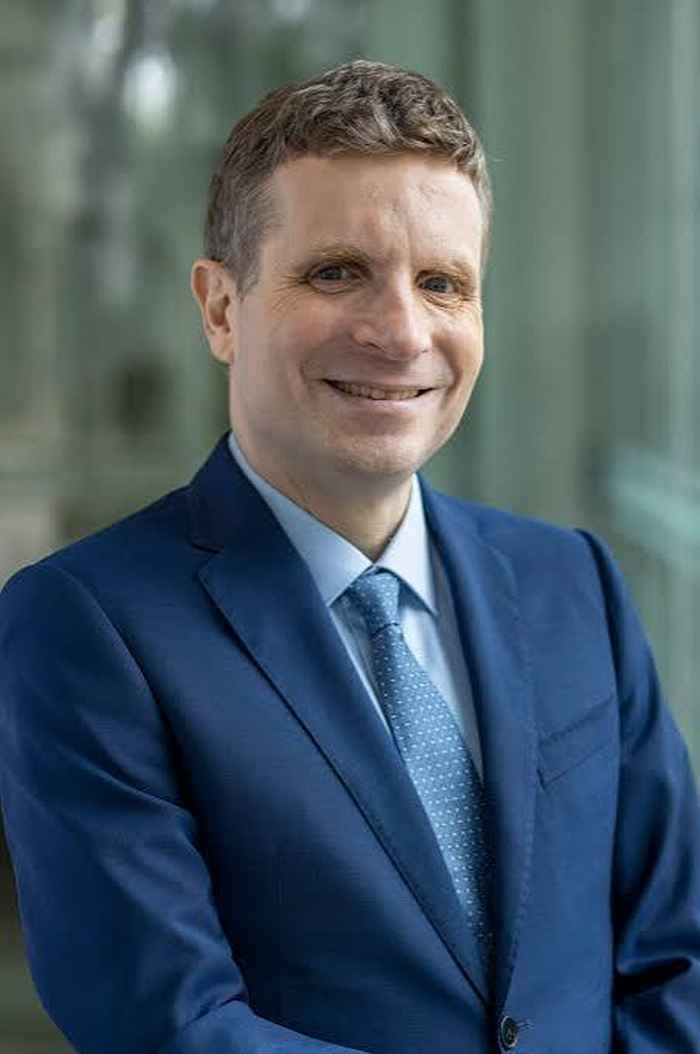
Damian Chalmers is Professor at the National University of Singapore where he was Vice Dean for Research for 4 years in its Law Faculty and head of the ASEAN Research Cluster at its Centre of International law for 2 years. He was previously Professor of EU Law at LSE, and Heads of its European Institute and Jean Monnet Centre for Excellence. He has been a co-editor of the European Law Review. His current research focuses on two topics: the domestic conditions for legal globalisation and how these transform it, and changes in the nature of EU law over time.